
Small Business Restructuring in the Northern Territory — SBR for Darwin, Alice Springs & Regional NT
The Northern Territory has recorded 42 SBR appointments — 0.7% of the national total. From Darwin to Alice Springs and remote communities, NT businesses are using SBR to restructure debt and keep trading.
Northern Territory Small Business Restructuring Statistics — 42 SBR Appointments
The Northern Territory accounts for 0.7% of all Small Business Restructuring appointments nationally, with tourism and remote business challenges as key factors.
NT businesses often need a restructuring plan that works around seasonal demand, long supply lines, and remote operating conditions
From Darwin hospitality operators to Alice Springs contractors and remote service businesses, many Territory companies face uneven cash flow driven by wet season shifts, freight costs, staffing pressure, and delayed payments.
Seasonality can be extreme
Tourism and hospitality businesses in the Top End often need repayment timing that reflects stronger dry-season trading.
Remote logistics drive cash pressure
Freight costs, project distance, and supplier access can tighten margins quickly for Territory businesses.
Licensing and compliance still matter
Building board requirements, payroll tax, and workplace obligations still need active management during the restructuring period.
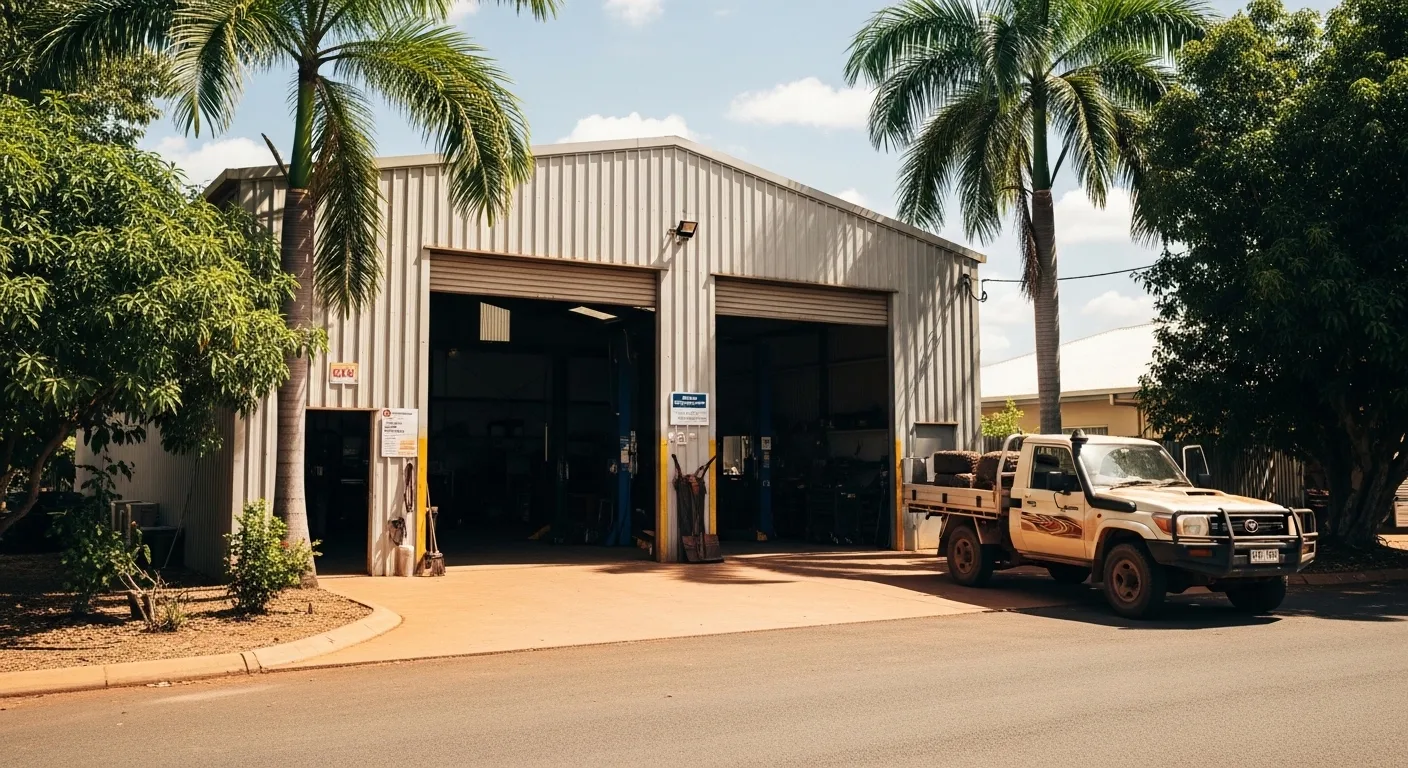
42
Total NT Appointments
Since SBR inception
0.7%
National Share
Smallest jurisdiction by volume
24%
Tourism & Hospitality
Dominant NT industry
SBR Hotspots in the Northern Territory — Darwin, Alice Springs & Katherine
Darwin dominates, with Alice Springs and Katherine also recording SBR appointments. Remote businesses face unique access challenges.
| Area | Appointments | Share of NT Total |
|---|---|---|
| Darwin CBD & Inner Suburbs | 16 | 38.1% |
| Palmerston & Litchfield | 9 | 21.4% |
| Alice Springs | 7 | 16.7% |
| Katherine | 4 | 9.5% |
| Remote & Regional NT | 6 | 14.3% |
Note: Remote NT businesses often engage Darwin-based or interstate practitioners who service the Territory remotely.
NT Regulatory Considerations — Licensing, Payroll Tax & Remote Business Challenges
Territory licensing, remote business challenges, and seasonal tourism create unique factors for NT businesses entering SBR.
NT Licensing & Registrations
Builders, electricians, and plumbers should check whether SBR triggers any notification or review obligations under the NT Building Practitioners Board and relevant licensing bodies.
Payroll Tax Thresholds
NT payroll tax applies above $1.5M in wages. Outstanding payroll tax is an eligible SBR debt and can be included in a restructuring plan.
Territory Revenue Office Debts
Stamp duty, land tax equivalents, and other debts owed to the NT Territory Revenue Office may be included in an SBR plan depending on the specific circumstances.
Remote & Regional Business Challenges
Many NT businesses operate in remote locations with high freight costs, seasonal access limitations, and reliance on government and defence contracts. These factors create unique cash flow pressures that SBR can help address.
NT Regulator References
Always confirm current requirements directly with the relevant regulator before proceeding with SBR.
Top NT Industries Using Small Business Restructuring — Tourism, Construction & Transport
Tourism and hospitality leads, followed by construction and transport and logistics.
Tourism & Hospitality
Darwin and Top End tourism operators, hotels, and restaurants face extreme seasonal demand between dry and wet seasons.
Construction
Building and trades in the NT face unique challenges including remote project logistics, cyclone-related disruptions, and high material transport costs.
Transport & Logistics
Freight, road transport, and logistics businesses serving remote communities and mining operations face volatile fuel costs and long payment cycles.
How to Find an SBR Restructuring Practitioner in Darwin & the Northern Territory
Follow these steps to identify and engage a registered restructuring practitioner in the Northern Territory.
- Confirm your total debt is under $1 million (excluding employee entitlements).
- Ensure all employee entitlements (wages, super, leave) are current.
- Gather BAS lodgement history, creditor aging reports, and recent financials.
- Search the ASIC registered liquidator directory for NT-based or Darwin-based practitioners.
- Request scoping calls from at least two practitioners to compare approach and fees.
- Ask specifically about their experience with remote NT businesses and Territory licensing requirements.
Why SBR Works for Northern Territory Businesses
The NT's small-market flexibility, seasonal economy, and remote business dynamics align to make SBR a practical pathway:
42 NT appointments (0.7% of national total) reflect three structural advantages for Territory small businesses considering SBR:
Small-Market Flexibility
42 NT appointments (0.7% of national total) reflect a smaller Territory economy. Practitioners typically service the NT from Darwin, Brisbane, or Adelaide — scoping calls and remote engagement work well, and the compact market means introductions and referrals happen fast through established channels.
Wet/Dry Season Fit
Tourism & hospitality (24% of NT SBR appointments) face extreme seasonal swings between wet and dry seasons. SBR plans running up to 3 years can align payments with dry season revenue peaks — a natural fit for Darwin tour operators, Kakadu accommodation, and Top End hospitality.
Remote Business Accommodation
Transport & logistics (15%) and construction (22%) businesses serving remote NT communities face long payment cycles, high freight costs, and cyclone-related disruptions. SBR plans can accommodate lumpy revenue and project-based cash flow that standard ATO payment plans struggle with.
87% plan approval rate + 93% continue trading post-SBR = a proven pathway for Northern Territory businesses.
NT Director Concerns About SBR — Addressed Directly
The NT-specific questions directors raise most often about Small Business Restructuring. If any apply, discuss with a practitioner before acting.
Will my NT Building Practitioners Board licence be cancelled if I enter SBR?
Not automatically. The NT Building Practitioners Board assesses each SBR situation case-by-case and does not treat SBR appointment as automatic grounds for licence cancellation (unlike liquidation, which typically does). However, notification obligations apply. Speak to your practitioner and, if needed, a licensing lawyer before appointment.
Can I include NT Territory Revenue Office payroll tax debt in an SBR plan?
Yes. Payroll tax owed to the NT Territory Revenue Office (threshold $1.5M in annual wages) is an unsecured Territory tax debt and is eligible for inclusion in an SBR restructuring plan, provided total liabilities stay under $1 million. The Territory Revenue Office votes on the plan like any other creditor.
Is SBR practical for NT tourism businesses with extreme wet/dry seasonal revenue?
Yes, and particularly suitable. SBR plans can run up to 3 years with payment schedules designed around expected seasonal revenue. Darwin tour operators, Kakadu accommodation, and Top End hospitality often find SBR better suited to their cash flow than standard ATO payment plans that expect steady monthly payments across wet and dry seasons.
Is it hard to find an SBR practitioner based in the NT?
The NT has a very small local practitioner base. Most NT businesses work with practitioners based in Darwin, Brisbane, or Adelaide. Many practitioners service the NT remotely with video consultations and electronic document exchange. Median practitioner fees ($16,137 for restructuring phase, $6,739 for plan) are consistent nationally regardless of location.
My NT transport or remote-service business has project-based cash flow with long payment cycles — can SBR accommodate this?
Yes. Transport and remote services businesses serving mining, defence, or government contracts often face 60-90+ day payment terms. SBR plans can include payment schedules aligned to expected contract payments and seasonal access windows. The 87% national approval rate reflects creditor willingness to accept realistic cash flow structures.
Does the Northern Territory have any Territory-specific SBR support schemes?
No. SBR is a federal process under the Corporations Act 2001 and no NT Territory scheme specifically funds it. However, Business NT provides general advisory support, and the ATO runs the Small Business Debt Helpline. The NT Territory Revenue Office offers payment arrangements and hardship provisions independently.
How do cyclone-related disruptions or wet season access limitations interact with SBR timing?
SBR has a statutory 20-business-day restructuring phase and 15-business-day creditor vote period. Cyclone events or wet season access limitations can affect document gathering and creditor communication, but do not extend statutory timelines. Plan the appointment timing carefully — ideally during dry season or stable weather windows — and work with your practitioner on contingency planning.
Northern Territory SBR & Regulator Glossary
NT-specific terms used in Small Business Restructuring — Territory regulators, licensing bodies, and regional terminology.
- Small Business Restructuring (SBR)
- Formal debt restructuring process under Part 5.3B of the Corporations Act 2001 (Cth) for eligible Pty Ltd companies with total liabilities under $1 million. Directors retain control while the plan is developed. The Northern Territory accounts for 0.7% of all national appointments (42 cases per ASIC Report 810) — the smallest state/territory share.
- NT Building Practitioners Board
- Northern Territory regulator for building and construction industry licensing. Administers builder, plumber, electrician, and related trade licences. The Board assesses SBR situations case-by-case — unlike liquidation which typically triggers automatic licence cancellation, SBR appointment does not automatically result in licence action.
- NT Territory Revenue Office
- Northern Territory government body responsible for collecting Territory taxes including payroll tax (threshold $1.5M annually), stamp duty, and other Territory taxes. Territory Revenue Office debts are unsecured creditors in SBR plans and vote alongside other creditors. Post-appointment Territory tax obligations continue on current terms.
- NT Payroll Tax
- Territory tax levied on wages above the $1.5M annual threshold. Rate is 5.5% (standard). Outstanding payroll tax is an unsecured debt that can be restructured in an SBR plan. Ongoing payroll tax obligations post-appointment must be paid on current terms.
- Wet Season / Dry Season
- The NT's defining seasonal cycle — the Dry (April–October) brings peak tourism, construction, and transport activity; the Wet (November–March) sees sharp revenue drops, cyclone risk, and road access disruptions. SBR plans running up to 3 years can accommodate these cycles with peak-season weighted repayments.
- Darwin CBD & Inner Suburbs
- Darwin's central commercial area — highest concentration of SBR appointments in the NT (16 cases, ~38% of NT total). Reflects density of professional services, hospitality, tourism operators, and construction firms headquartered in the capital.
- Palmerston & Litchfield
- Greater Darwin satellite region with 9 SBR appointments (~21% of NT total). Strong residential construction, logistics, and trades base. Growing suburbs serving Darwin's northern corridor and defence installations.
- Alice Springs
- Central Australia's main town with 7 SBR appointments (~17% of NT total). Tourism, mining services, construction, and Indigenous services businesses. Gateway to remote Central Australia operations with long supply lines to Darwin and Adelaide.
- Remote & Regional NT
- Areas outside Darwin and Alice Springs including Katherine, Tennant Creek, Nhulunbuy, and remote communities — combined 10 SBR appointments (~24% of NT total). Businesses face unique challenges: extreme freight costs, seasonal access, reliance on government/defence contracts, and remote workforce logistics.
- ASIC Report 810
- ASIC's June 2025 review of the Small Business Restructuring process covering 3,388 appointments from July 2022 to December 2024. Source of the 0.7% NT share, 87% national plan approval rate, 93% post-SBR trading continuation, and median practitioner fees of $16,137 and $6,739.
Further Reading — SBR, ATO Debt & State Comparisons
NT SBR intersects with federal SBR mechanics, ATO enforcement, and other state-level patterns. Core adjacent resources:
What is SBR?
Complete guide to Part 5.3B restructuring — eligibility, process, 87% approval rate, and outcomes.
SBR Eligibility Criteria
Pty Ltd, debts under $1M, lodgements current, 7-year rule, and director duty compliance.
How SBR Works
5-step timeline, 20-day restructuring phase, 15-day creditor vote, and 50%-by-value threshold.
ATO Debt Help
Payment plans, SBR, liquidation, garnishee, DPN, and enforcement escalation roadmap.
Director Penalty Notices
21-day response, lockdown vs non-lockdown DPNs, and personal director tax exposure.
SBR Statistics Dashboard
National SBR data — 6,074+ appointments, 87% approval rate, industry and state breakdowns.
Frequently Asked Questions — Small Business Restructuring in the Northern Territory
Check Whether Your Northern Territory Business Is Eligible for Small Business Restructuring
Check eligibility now so creditor pressure can be managed before it affects seasonal trading, remote service delivery, licensing, or your next restructuring option.
Check Your EligibilityLast updated: